SFT 2026-27 LLASO Project 1 - Lunar Logistics Supply Chain (VR Simulation, Game or Math Model)
LLASO Project 1 - Lunar Logistics Supply Chain (VR Simulation, Game or Math Model)
NASA Reference Name: LLASO-P1-VR-2026
Executive Summary
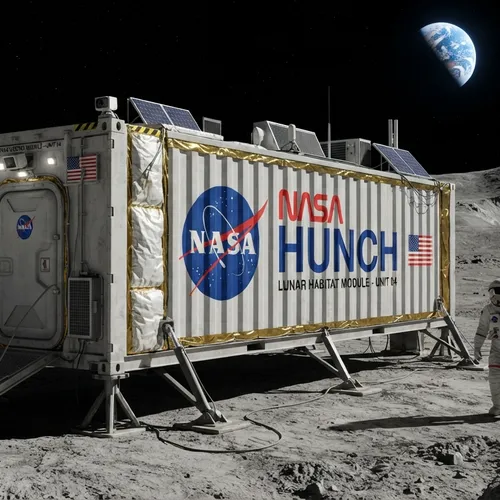
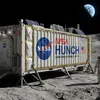
Build a multi-step simulation (VR, game, or math model) that shows how a lunar cargo container is packed and loaded on Earth, then unpacked in lunar gravity after arrival. This is the conceptual backbone of the LLASO initiative — its environment and dimensions feed every other project. Objective: cover (1) Earth-side optimized packing/loading and (2) lunar arrival and pressurized unloading. Deliverable: a working simulation with at least an Earth phase and a lunar phase, demonstrating packing optimization and 1/6 g unloading. The overarching aim is to optimize packing capacity and the efficiency of unloading on the Moon.
Requested By
NASA HUNCH / Kennedy Space Center
Problem Statement
Optimize the packing solution for a cargo container up to 40 ft long (or a cylinder of equivalent length, 3 meters in diameter). The emphasis is an optimized way to pack and unpack a lunar cargo module on Earth, move it from the logistics hall to the lunar surface, and then unload it with minimum human involvement on the Moon — potentially using robot(s). Background: with the change of focus and the postponement of the GATEWAY station, the lunar logistics focus (DSLM) has shifted to Logistics and Optimization.
- Propose the internal Structure to place all the supplies
- Also see General Requirements at ROBOTICS at SFT 2026-27 Additional Resource HUB for Software and Hardware Engineering plus Robotics Click Here!!
Requirements Overview
Simulate a cylindrical or box cargo container module (~3 m dia., ~40 ft long)
Model CTBs, lockers, and canister cargo types, including unusual shapes
Track the location of CTBs, lockers, canisters, packing boxes, etc.
Include 1/6 lunar gravity physics on the Moon, regular gravity on earth
Support both rack & stacks plus other internal container infrastructure
Include loading and unloading sequences
Be usable with no prior VR experience, with a display
Major Constraints
Lunar gravity is 1/6 of Earth's — mass handling behaves differently
Regolith contamination must be excluded from all pressurized spaces
No specific commercial launch vehicle can be assumed — the design must be generic
The cargo module interior must stay accessible by robot or human
Key Operational Goals
Players must load and retrieve cargo items in the shortest possible time, while accurately tracking the location, size, and weight of every item. The key performance metrics are:
Measure and Record
Time — speed of placement and retrieval
Quantity — how completely the container is filled
Weight — total load and distribution ( Set
Tracking — knowing the exact location of each item type
Cargo Types
Each challenge should incorporate a mix of the following items:
Cargo Transfer Bags (CTBs): 1U, 2U, 3U, 4U, 5U, or 6U
Metal Lockers: 1U, 2U, 3U, 4U, 5U, or 6U (e.g. https://nasahunch.com/catalog/single-stowage-lockers-c4u694ynuv68l7zchdnnqxle and https://nasahunch.com/catalog/double-stowage-lockers-cqdungh47ekjnsmaejw5p7ab )
Unusual/irregular items: PODS and cylinders (e.g., 4 ft high × 2 ft wide)
Mission Loading Strategy
All challenges must follow a realistic mission-based loading logic:
The scenario is based on a 14-day mission.
LIFO (Last-In, First-Out) principle: Items needed on Day 1 of the mission are loaded last; items needed on Day 14 are loaded first.
Players must plan their initial loading strategy around this reverse-chronological supply schedule.